A Film Night for Noticing Casino Props
A film night for noticing casino props helps you see how cards, signs and furniture steer attention in a fictional casino scene without treating it as real-play advice.
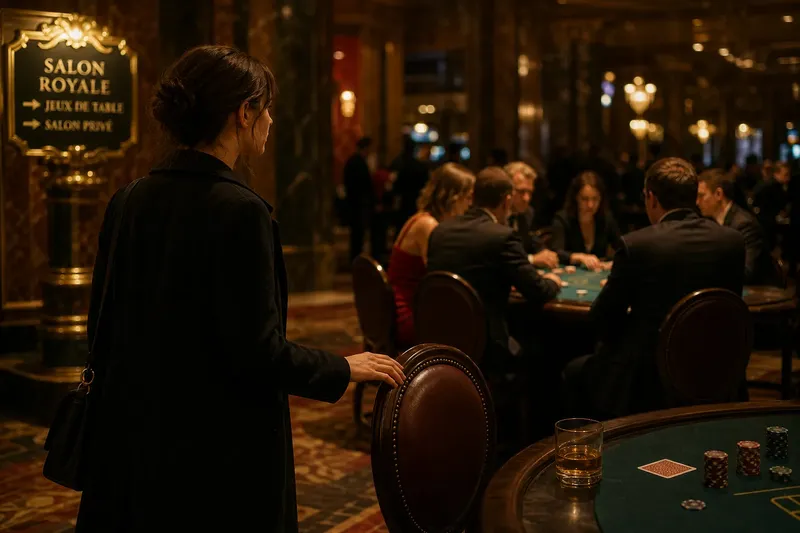
A film night for noticing casino props can turn a fictional casino scene into a small exercise in visual attention: watch where the cards, signs and furniture direct your eye, then ask what the scene wants you to notice. You do not need to know casino games or pause every few seconds. A notebook, a comfortable seat and one scene are enough.
The point is not to decode a real table or infer how anyone should play. Film props are arranged for storytelling. A sign may establish a setting, a card may carry a character’s attention, and a chair may make someone look isolated. Follow those choices as pieces of cinema, not as a map of real play.
What should you choose to watch?
Pick a film or episode with a casino scene you can return to easily. It might show a crowded gaming room, a quiet private salon or only a brief passage through a lobby. Any of those can work: the exercise is about what the camera makes visible, not how much gambling appears.
Choose a scene with a clear beginning and end, such as a character entering a room and approaching a table. If you already know the story, that can help you distinguish what you remember from what the shot actually shows. If the scene is unfamiliar, let the first viewing be a simple introduction.
Before pressing play, decide on a modest scope. You might follow one table, one character or the route from entrance to seating area. Trying to track every card, light and background extra at once can make the scene feel like homework.
How do you set up a low-key viewing?
Keep the setup plain. Put a notebook or a few blank sheets nearby, and use a pen that does not make you stop to fiddle with it. A pause button is useful, but there is no need for specialist software, screenshots or a detailed floor plan.
On the first viewing, leave the notebook alone. Watch the scene at its normal pace and notice the broad impression: does the room feel welcoming, tense, glamorous, cramped or deliberately anonymous? Those words are starting points, not verdicts. The scene’s sound, editing and performances contribute alongside the objects.
Afterwards, write down one moment you remember clearly. It could be a character glancing at a card, a sign appearing behind someone’s shoulder or a chair positioned apart from the others. A single remembered detail gives your second viewing somewhere to begin.
Keep the film moving on the first pass; let the scene make its own rhythm.
Where do cards direct your attention?
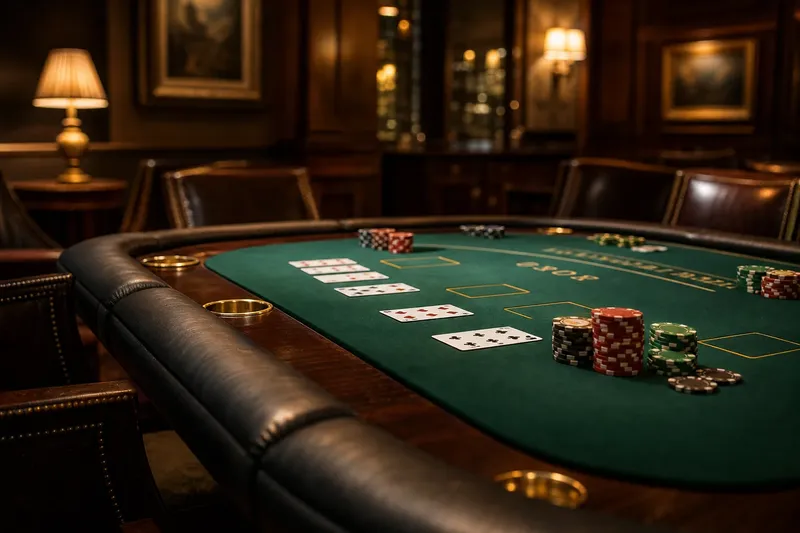
On the second viewing, follow the cards rather than trying to identify the game. Ask where they appear in the frame, who looks at them and when the camera chooses to show them. A close-up can make a card feel consequential even if the scene never explains its value.
Notice what sits beside the cards. A hand hovering near them, a face beyond the table or a reflection in polished glass may matter more to the scene than the printed design. Sometimes the card is a visual anchor: the camera holds it steady while a character’s expression changes. Sometimes it is barely visible, and the reaction does the storytelling.
Record observations in neutral language. “The camera cuts from the card to the player’s face” describes what happens. “The card means the player has won” adds an interpretation the film may not support. Keeping those apart makes the viewing more interesting, not less.
Also notice what you cannot see. A prop may be obscured by a hand, shown only from the back or left outside the frame. That absence can preserve suspense or keep the audience aligned with a character who does not know what is happening.
What do signs tell you about the room?
Signs often orient the audience before a character says anything. Look for lettering above an entrance, a marker near a table or a notice tucked into the background. Ask whether it names a place, divides one area from another, or simply supplies visual texture.
Then watch how long the sign stays legible. A crisp, centred sign may invite you to read it; a blurred or fleeting one can establish a casino atmosphere without asking for close attention. The camera’s framing matters as much as the words. A sign behind a character may make that person seem connected to a particular part of the room, even when they never look at it.
Notice whether a sign is repeated or singled out. Several similar markers can make a space feel organised, while one brightly framed notice may draw attention to a particular threshold or destination. Treat that as a choice in the film’s visual design, not evidence about how an actual venue works.
How does furniture shape the scene?
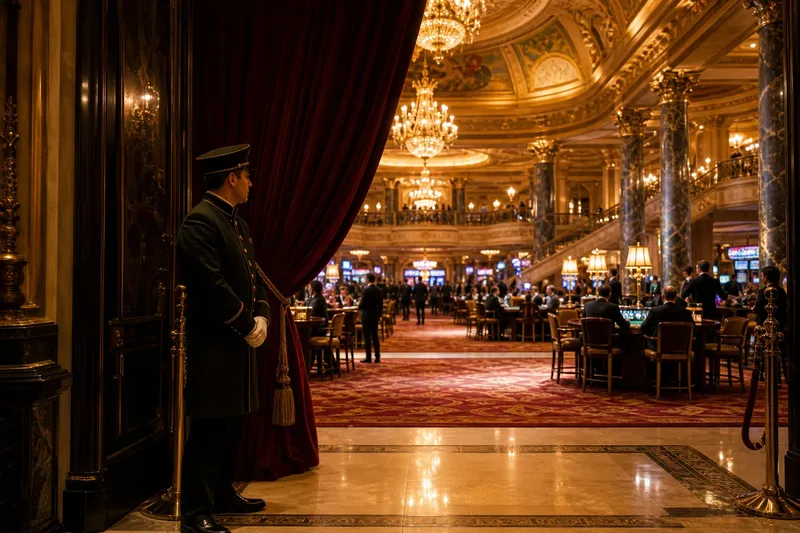
Furniture establishes relationships. A table brings people into a shared circle; a chair set apart can suggest waiting, watching or exclusion. The camera may make that arrangement feel friendly or uncomfortable through distance, angle and the position of the actors.
Follow the path a character takes through the furniture. Do they pause beside a chair, move around a table or remain standing while others sit? Those movements can reveal hesitation or authority without a line of dialogue. The furniture itself does not need an elaborate design to do useful storytelling work.
Look beyond the main table, too. A low seat near a wall, a narrow aisle or a row of chairs can shape how crowded the room feels. If the scene cuts between a broad view and a tight close-up, compare the two: the full layout may seem orderly, while the close-up makes a character feel boxed in.
Say you are watching an invented scene in which Mara enters a fictional casino, spots a card at a table and stops beside an empty chair. On a second pass, you might note that the camera shows the card before her reaction, then keeps the chair between her and the seated group. The observable result is a sense of hesitation built through framing and placement; it does not tell you anything reliable about real play.
Which questions help you read the scene?
Do the cards matter, or do the reactions matter more?
Compare the time spent showing a card with the time spent showing faces and hands. If the reaction receives more attention, the scene may be asking you to read emotion rather than game information.
Is the sign readable on purpose?
Notice whether the camera holds the sign in focus or lets it pass in the background. Its visibility can tell you whether it is meant to inform the audience, orient a character or simply help establish the setting.
Who gets the comfortable seat?
Watch who sits, who stands and who is separated from the group. That arrangement may suggest status or unease, but check it against the acting and camera angle before deciding what it means.
Does the room feel different when the camera moves?
Compare a wide shot with a close shot or a moving camera with a fixed one. The same furniture can feel open in one view and confining in another, so the room’s mood may come from the filming as much as from its contents.
How can you keep observation separate from guesswork?
Use two simple columns in your notes: “visible” and “possible effect”. In the first, write what the film literally shows, such as “a blue sign appears above the doorway”. In the second, note a tentative response, such as “the entrance feels like a boundary”. Words like “seems” and “may” leave room for the scene to support more than one reading.
Resist translating props into instructions about gambling. A card close-up does not explain a game, and a sign or table arrangement does not provide a dependable guide to a real venue. Film-makers can alter layouts, lettering and objects for composition, character or plot. If a scene leaves the rules unclear, that may be deliberate, or it may simply not care about them.
You can also check your first impression against the scene’s wider context. Does the character’s expression support your reading of the chair? Does the dialogue make the sign relevant, or is it just behind the action? A prop can carry meaning, but it rarely has to carry the whole scene alone.
What is worth noting after the credits?
Choose one object that changed meaning for you as the scene unfolded. Perhaps a card first looked like a clue and later seemed to be a way of holding the frame still. Perhaps an ordinary chair became a boundary once a character refused to sit. Write one sentence about the shift, and stop there if that feels complete.
For a film night for noticing casino props, the useful habit is simple: describe what the camera shows before deciding what it means. Cards, signs and furniture can guide your attention without offering a lesson in real play. That distinction lets you enjoy the scene’s craft while staying alert to how carefully its fictional room has been arranged.